How it worked.
At the heart of Lively’s theory of change was the relationship between an older and younger person, with benefits flowing to each and to the wider community.
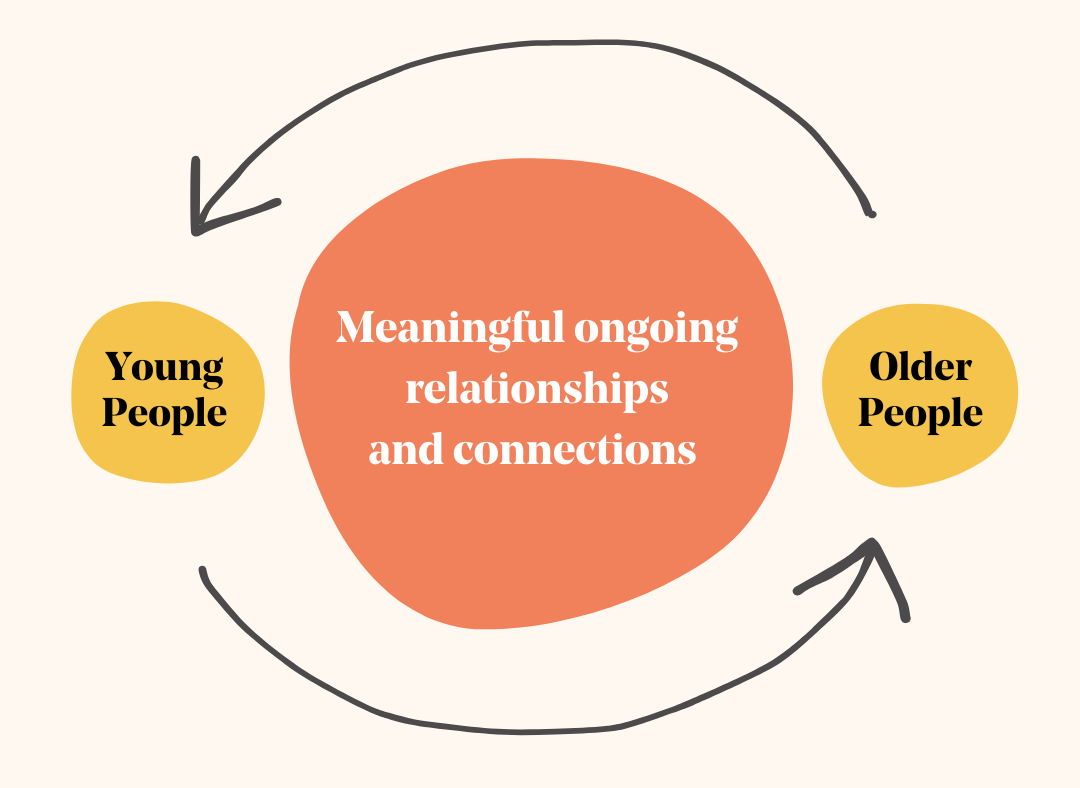
Increased sense of control, activity and engagement in their daily lives, and a stronger network of social connections and supportive relationships.
Older people
Greater employability, confidence and self-esteem, and increased sense of value and contribution in their community.
Young people
Greater empathy and understanding across generations, building a more age-friendly society, and a new model of participation in aged care for less siloing of care.
Community
Five services.


-
Basic cleaning and laundry, or other tasks to keep the home feeling tidy and comfortable.
-
Help to maintain the garden - working together to help with the bits that have become a bit too hard.

-
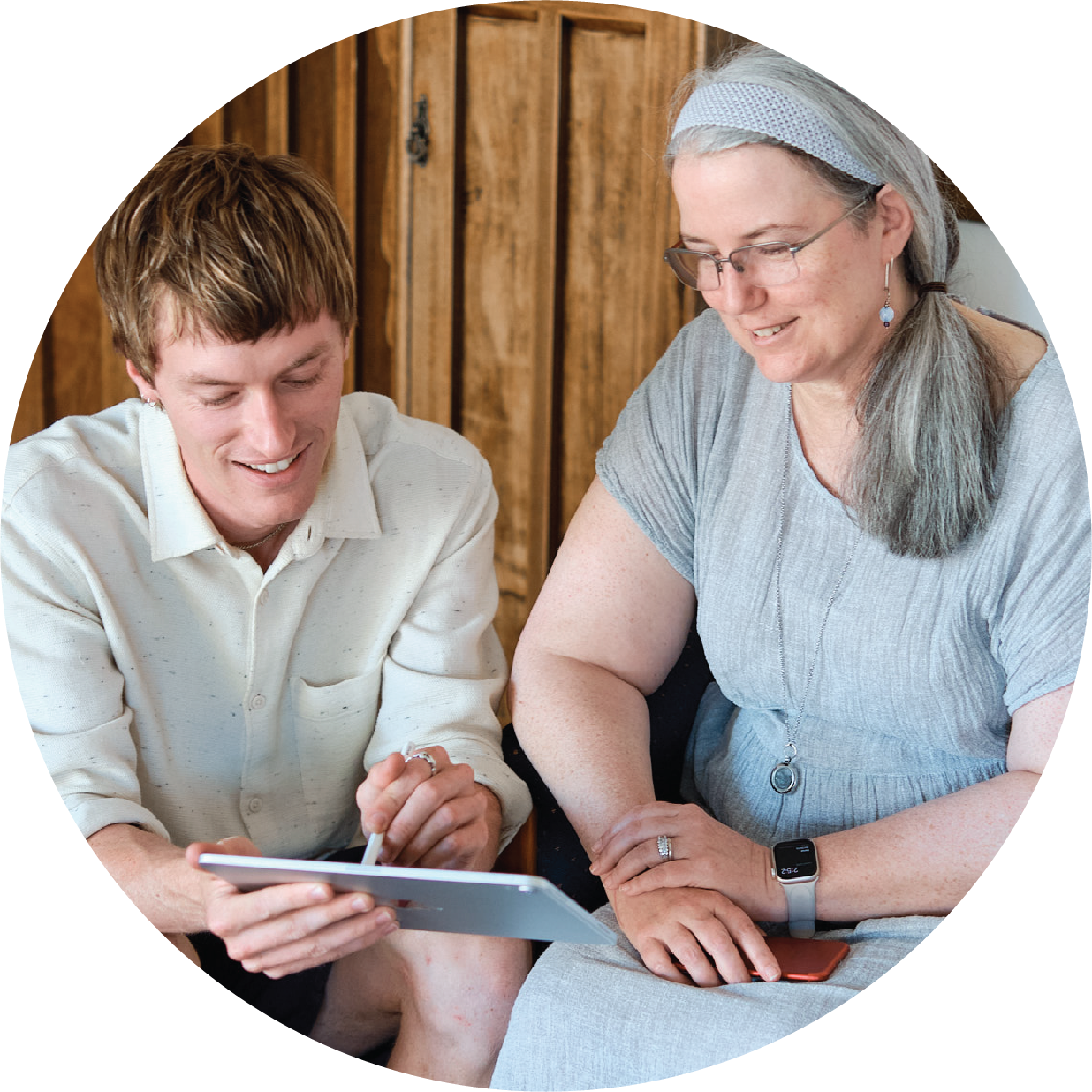
Getting familiar with a new device, or learning how to get online to connect, communicate and pursue interests.


-
Working on projects around the house or getting creative - think family history writing, documenting recipes, or craft projects.
-
Transport and assistance to get out to social activities, community events or places of interest.
Lively developed these services iteratively over around five years, together with older and younger people. They were designed to:
Provide support that was genuinely needed by older people.
Align with the skillset of young people who had little or no prior professional experience.
Create rhythm to the interactions for older and younger people so that a relationship could evolve over time.
Align with recognised service categories under the federal government’s aged care funding schemes.

Two programs.
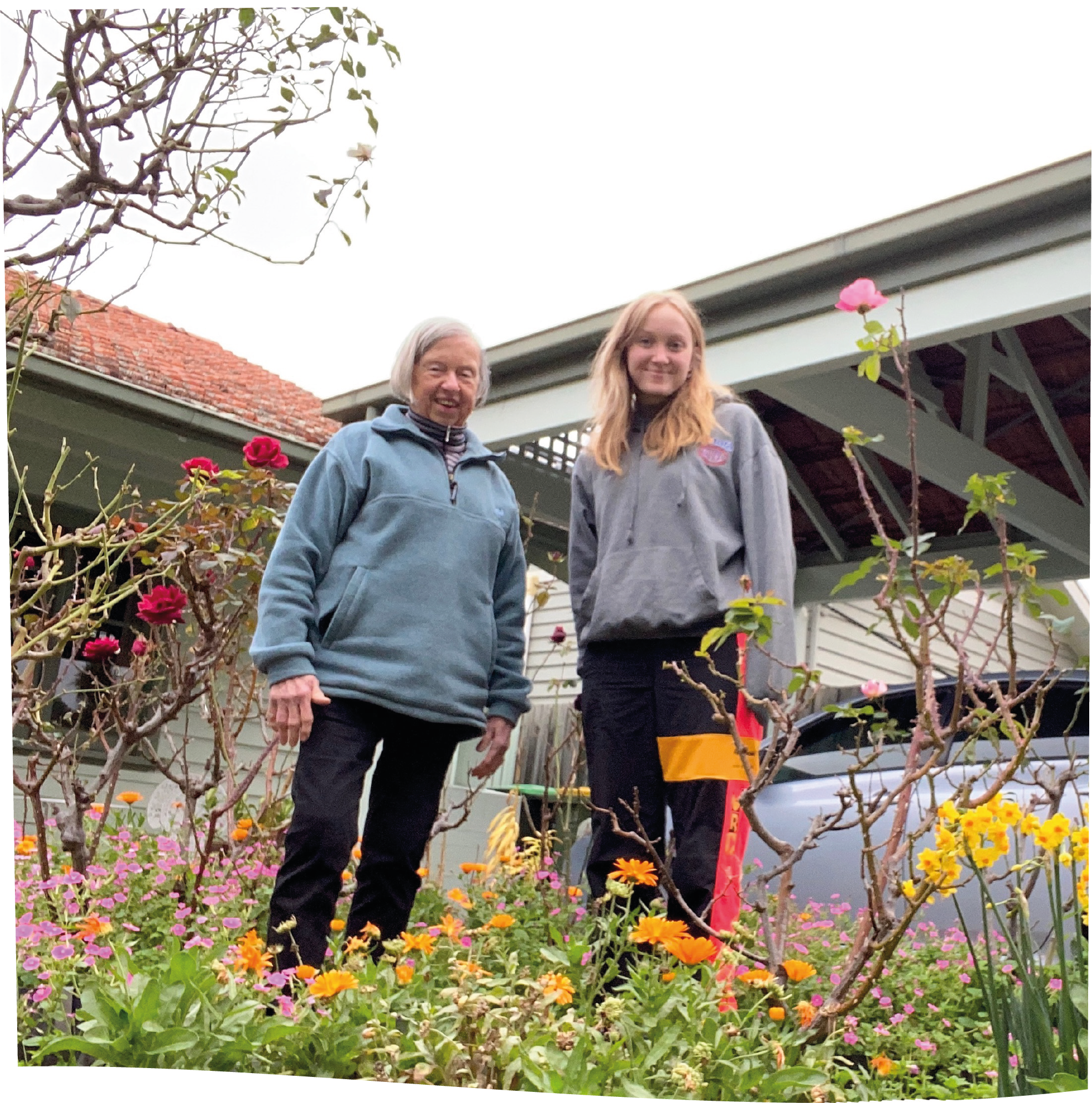
Acting as support workers, Lively Helpers were trained to offer Lively’s five services in support of the older person’s wellbeing at home. This support was subsidised by the Support at Home program and Commonwealth Home Support Program.
In-Home Support

In libraries, neighbourhood houses and other community settings, Lively Helpers worked in small teams to deliver technology help only, 1:1 or in group workshops. These included Mandarin-only and Vietnamese-only programs that frequently employed international students.
Community Tech Help
The Lively Character
Lively was special not just because of what it did, but how it did it. This was expressed in the ‘Lively Character’: a set of principles to make sure Lively stayed in ‘right relationship’ with each other and the wider world.
-
Lively was striking for its internal culture of care, fun and warmth, and this was often commented on by Lively Helpers, partners and other staff.
This was embedded in a number of ways:
A commitment to fun, sometimes at the expense of efficiency, especially when times were challenging. Meetings and gatherings always started with a game or activity to connect and laugh.
Celebrating and thanking people. The Lively HQ team was extremely proactive about thanking Helpers and one another for great work. In later years, Lively HQ would record short thank you videos as a group to thank individual Helpers.
Genuine interest in one another as whole people, not just as Lively employees. Meetings gave space for people to share what was going on in their outside life, and where their emotional energy was at.
Deliberate hiring that prioritised heart, cultural sensitivity and a deep belief in the importance of Lively’s work. Empathy was one of the essential criteria for incoming Helpers.
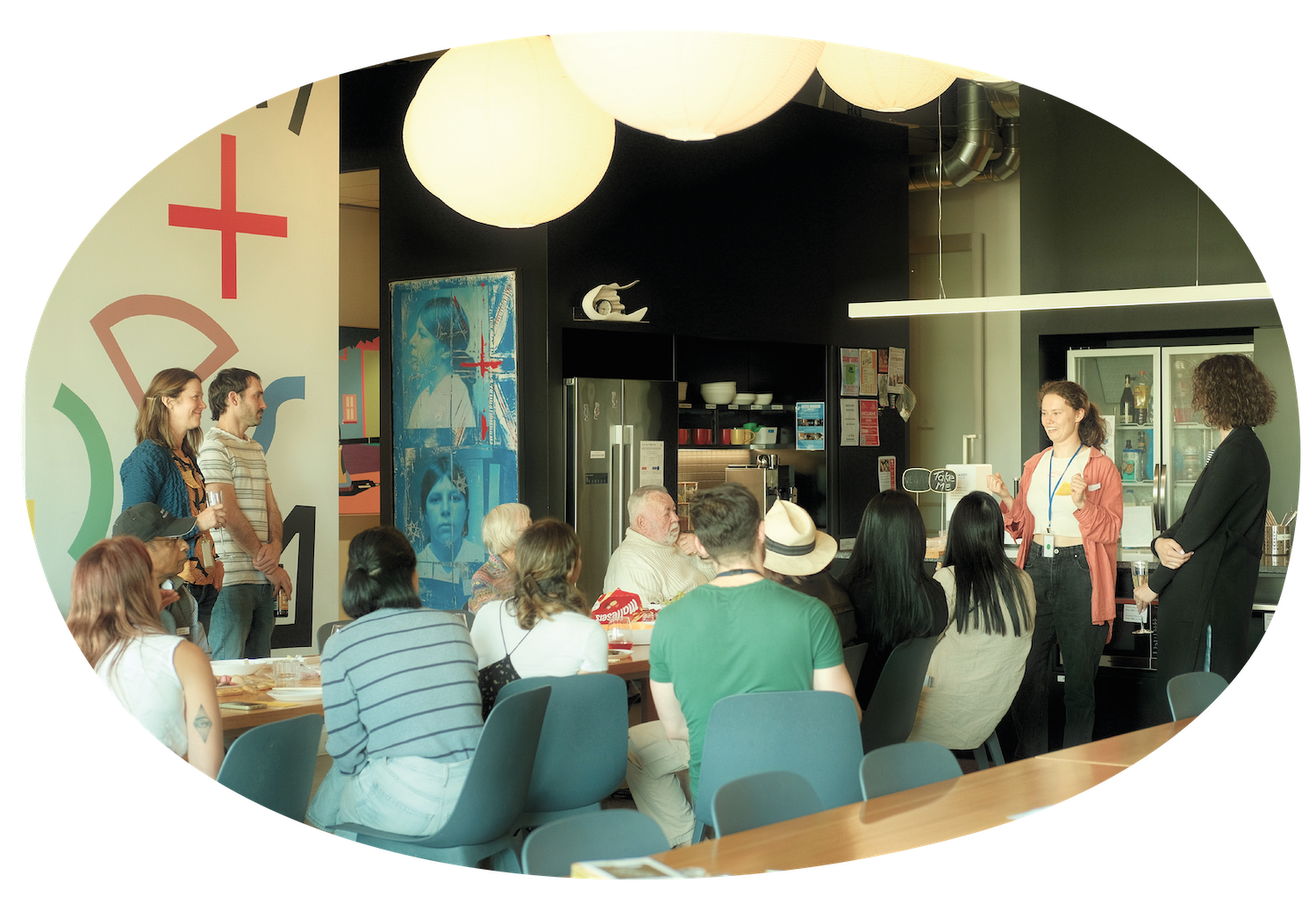
Strong check-in practices, an EAP and regular points of connection, including bimonthly in-person gatherings and upskilling for Helpers at the Lively office.
A beautiful office space at Our Community House in North Melbourne, filled with light and art, and which felt like a warm hug when you walked into it as a Helper, partner or HQ team member.
Proactive efforts to communicate safety and care to Helpers from marginalised backgrounds in a no-dramas way with robust and actively promoted processes to challenge internal sexism, racism or homophobia. An HQ team made of people of diverse ages, genders, sexualities and ethnicities.
All the above were modelled consistently by Lively leadership, including CEO and COO.
-
From the beginning, the Lively team pushed itself to do things really well, and to keep getting better at what it did. This began at the earliest design stage, and morphed into a strong continuous improvement process.
Early paid interviews with Lively Helpers informed the development of the Helper training and support program, and paid workshops were run 1–2 times a year with Helpers to reflect on and prioritise areas to improve the Helper program.
Lively’s in-home support program was developed by running a 12-week trial, in which 12 older people received free support from 3 young people. 3 co-design workshops were run at the beginning, middle and end of the process for reflections and feedback on how things were going.
A brains trust of older people receiving Lively services met bimonthly to reflect on the service, provide feedback and discuss ways to improve it. Participants were always remunerated.
Lively’s technology platforms were designed in-house using no-code tools with which Lively HQ knew how to build and very quickly iterate, so that technology was constantly evolving to make Helpers’ and Lively HQ’s lives easier. This included Airtable for Lively’s CRM and Glide for Lively’s in-house app which handled all session notes, timesheets and incident reporting.
Lively’s technology systems supported team members to suggest, flesh out and project manage improvements.
Through all these mechanisms, the team had a great culture of feedback, reflection and continuous improvement.
-
The Lively team understood the importance of getting the fundamentals right before any other good things could happen. Lively members needed a service that was good quality and where the billing happened smoothly, while Lively Helpers needed a job that was safe where they were properly paid. All this needed to be underpinned by a strong culture of transparency and trust.
To this end, the team took the following steps:
The team collected data on Lively’s impact and service quality very proactively, including entry, exit and annual surveys for Helpers, as well as an annual survey for Lively in-home members and regular surveys for Community Tech Help participants. This was bolstered by Lively’s regular conversations with its members ‘brains trust’.
The team developed an extensive internal ‘Helper Hub’, accessible via the Lively app, which contained a complete overview of safety protocols, internal policies as well as tips and other resources for starting conversations, managing professional boundaries or responding to mental health challenges amongst Lively members.
Lively Helper training focused heavily on safety and building Helper confidence through practice scenarios. It also dovetailed closely with the content on the Helper Hub so that Helpers knew how to find the information they needed when they needed it.
Lively always erred on the side of generosity when it came to pay. Helpers were paid slightly above the relevant award rate, and where there was an issue with a disputed session, Lively typically chose not to contest this with Lively members while bearing the full cost of paying the Helper.
Lively placed responding to payslip or billing concerns as top priority issues.
Lively always paid Helpers for training sessions, check-ins and workshops.
The Lively team was always on the front foot when it came to changes or uncertainties around Helper pay, actively approaching Helpers about questions around their pay such as how to properly recognise their unpaid admin time organising sessions. These processes built a lot of internal trust.
The members of Lively HQ determined their own appropriate award classification for remuneration, and then negotiated this with their colleagues.
-
Borrowed from Adrienne Maree Brown’s Emergent Strategy, this principle was about respecting relationships as Lively’s only true lever for progress and impact, and letting progress and growth emerge at whatever pace kept trust intact and relationships strong.
This frequently meant moving more slowly through decisions—such as whether or not to let someone go, or whether to cut a program—and making sure that those affected by them were the ones involved in finding the solutions.
This showed up in a number of ways:
Lively HQ was constantly asking Helpers questions about their experience and inviting feedback. This took place in every bimonthly Helper gathering, in incidental conversations and check-ins, and in the regular opportunities to be involved in program and resource design—all of which were paid in recognition of their expertise.
The decision to invite a team of Helpers to occupy operational and leadership roles within Lively HQ helped ensure that employees’ on-the-ground experience was always at the centre of decision-making.
Lively cultivated a culture that did not patronise older and younger people. Helpers were given high levels of autonomy, while clients were referred to as “members” in recognition of their contribution to their Helpers, and the Lively community.
When responding to staff or Helpers who were not meeting expectations, Lively HQ had a strong culture and practice of avoiding scapegoating, starting with curiosity, and assuming that the individual wanted to do a good job. Casual staff were typically given extensive feedback and coaching before it affected their shifts.
Case study: Letting go of home care packages. In 2022, Lively was an accredited home care provider with a small collection of package holders. However, the company was struggling to grow its client base, while dealing with the significant administrative burden of maintaining compliance.
Lively HQ felt it may be in the interests of the business to stop case managing home care packages, but this had the potential to significantly affect 4–5 young Helpers as well as the older people they supported. Lively HQ reached out to these workers and paid them to be part of the decision-making group.
Ultimately, these workers helped make the tough decision that Lively would stop providing case management for these older people, but would find like-minded providers to take them on who were willing to continue engaging the same Lively Helpers.
-
While not completely flat in structure, the Lively team worked to avoid unnecessary hierarchies wherever possible, cut out middle-manning and allow frontline workers to exercise as much autonomy as possible.
Lively avoided intervention in sessions between Lively members and Helpers. Members and Helpers scheduled in-home sessions directly with each other, rather than having to go via Lively’s Matching team or a central rostering process. The format of sessions themselves also was not tightly prescribed, but could be figured out on the day within the broad guard rails of Lively’s service list.
There was a high level of autonomy within Lively HQ with a focus on consultation, rather than approval processes. Lively’s Matching and Support teams were largely trusted to exercise judgement about their roles with the CEO and COO available for advice and input when they reasonably ought to contribute.
Lively HQ made smart use of new tech tools that avoided duplication and helped make sure everyone was looking at the same information. Via a single purpose-built app, Lively Helpers could access member information, schedule their sessions, write their notes, submit their timesheets, submit risk assessments, request approvals, sign documents and access Lively’s policies and procedures. This information was instantly visible to Lively HQ and Lively’s referring partners via their Partner Portal.
There were naturally limits to this, as compliance requirements frequently imposed additional bureaucracy—see ‘Managing aged care compliance’ on the ‘What we were still figuring out’ page. Lively’s Matching team still regularly found itself passing messages between Helpers and care managers and the team had a goal of reducing this middle-manning.
-
Lively took a systems view of the social challenges it sought to address, and worked openly and collaboratively with others to pursue systemic change.
This meant making sure that, while Lively worked to combat ageism, unemployment and disconnection, it was not exacerbating other social injustices, and was supporting the community of people working on them. This included measures such as:
Ensuring Lively was safe and accessible to people with diverse ethnicities, genders, neurodivergence and sexualities. Lively was extremely welcoming to members of the LGBTQIA+ community, which made up almost one half of employees, including 10% who were trans or non-binary.
In 2025, Lively launched a series of Community Tech Help programs catering exclusively to Melbourne’s Chinese and Vietnamese communities and was in the planning stages for a program engaging Aboriginal Elders and young people for 2026.
Working towards environmental sustainability and regeneration, and not accepting funds from major polluters. This included rejecting a grant from a gas pipeline company in 2025.
Lively was also generous with its knowledge, and did not try to gatekeep it from others seeking to do similar work, to which this website is testament. The Lively team delivered webinars, presented at conferences and produced learning materials for others hoping to take lessons back to their workplaces. The team trusted that a rising tide lifts all boats.

Hear from a Lively member and Helper about their experience at Lively at Holstep Health’s 2025 Shaping Inclusive Futures event.

Intergenerational Care Resources
‘How to Lively’: A User’s Guide to Intergenerational Care
Guide also contains links to detailed Lively youth training modules and digital literacy presentations.
Or download individual topic guides developed by the Lively team.
Got questions about finances and developing a business model? Reach out to Good Flock on hello@goodflock.org for support.